By the order of the Rector of the Amur State Medical Academy of the Ministry of Health of Russia T. V. Zabolotskikh No 115 of 20.05.2014, the Department of Operative Surgery and Topanatomy was added to the Department of Normal Anatomy from 1.08.2014. The new name of the united department is the Department of Anatomy and Operative Surgery.
Human anatomy is one of the fundamental medical sciences, the study of which begins immediately after the admission of students to a medical higher educational institution. Therefore, the Department of Human Anatomy begins its activities from the day when the educational institution is opened.
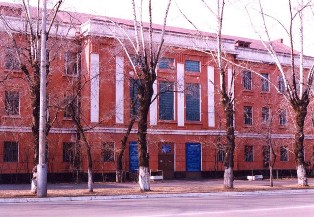 |
The Amur State Medical Academy (and in those years - the Blagoveshchensk State Medical Institute) was opened on September 1, 1952 and was originally located in the building at 124 Lenin Street. The Department of Normal Anatomy occupied the eastern wing of the first and basement floors of this building. The area of the department was about a sixth of the entire building, which was enough to start the educational process. In one of the rooms of the basement, two concrete baths were built, which were intended for storing corpses and wet educational preparations. By the beginning of classes, the department centrally received a number of models, bone and wet preparations. To accommodate them, an auditorium was allocated, which initially served as a museum of the department. In addition, during the first year, an X-ray machine (RUM-6), a microtome, a microscope, a binocular magnifier (MBS-2) and a sectional set of instruments were purchased.
Over the following years, the department gradually expanded its area, material and technical base and was equipped with new equipment. In 1962, it was given rooms on the second floor of the east wing of the building, and in 1965 part of the classrooms of the west wing were transferred to it. Thus, the number of study rooms, offices for teachers and scientific laboratories has significantly increased, as well as the opportunity to expand the museum.
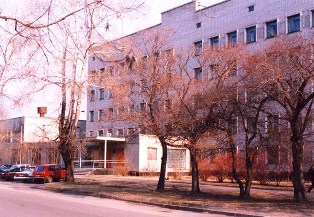 |
In August 1984, the department moved to the standard premises of the new "morphological building" at 103 Gorky Street.According to the order of the rector, the department was allocated premises on the basement, first, fourth and fifth floors. On the ground floor there was a corpse storage and three warehouses. On the ground floor there is a restoration laboratory and a "clinical anatomy" room. On the fourth floor there are five classrooms, the head's office, an assistant's room, a library, a computer class, a museum, a laboratory assistant, a preparatory, a scientific laboratory and a refrigeration chamber. On the fifth floor of the eastern wing of the building there are three classrooms for teachers and 2 scientific laboratories.